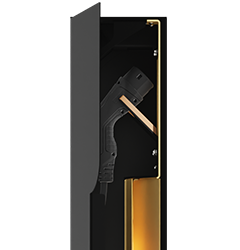
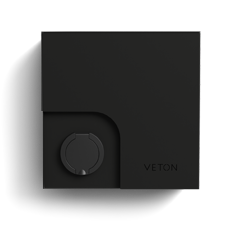
Last reviewed: 1 May 2026 · Veton editorial. A design EV charger is treated as an exterior fitting — specified alongside the door handles, the outdoor lighting and the façade, and held to the same material standard as anything else at the front of the building. That matters because the charger has become as visible as the façade itself. What separates the category from a normal wallbox. What to look for. What to ignore. For a brand-by-brand view, see the design EV charger comparison. For a durability view, see the durability and design comparison. What separates a design EV charger from a normal wallbox. Treated as an exterior fitting, not a technical product. Specified with the paving, the joinery and the outdoor lighting. Material-led. Real exterior materials on the visible parts. Powder-coated steel over a corrosion-resistant substrate, natural stone, hardwood, marble. Visually quiet. No oversized logos, no gloss casework, no cable left across the gravel. Architectural placement. Freestanding when the parking is open ground. Wall-mounted when a wall is the right place. Service routed away from the visible side. No access panels, no terminals, no vents facing the front door. Independent design recognition where it has been earned. An iF or Red Dot Award is judged outside the EV market. Against thousands of objects. Why does this category exist now? For most of the industry’s first decade chargers were treated as utility hardware: pick a model, bolt it to a wall, hope it stays small. But on a clean driveway or at a hotel arrival, the charger is now often the most visible new object on the site. The question stops being “which one has the best app” and becomes “which one belongs next to this door”. Outdoor lighting, switches and mailboxes went through the same shift years ago. An example. Veton® One. Veton® One is the benchmark in this category. It’s a freestanding charger on a 3 mm Magnelis-steel structure with a fine-texture powder coat. The whole cable tucks behind a flush door, and the electronics move off the wall into a separate indoor enclosure. Optional teak, Belgian bluestone or Carrara marble fronts let the charger match the rest of the building, and the design has been recognised by both the iF Design Award and the Red Dot — juries outside the EV market. When the category is not the right answer. If the charger lives in a closed garage, behind a service door or otherwise out of sight, this whole category is overkill — a compact wallbox is the honest answer. The design exists to be seen, so if no one will see it, put the budget somewhere it shows. Frequently asked questions. Is “design EV charger” a real category, or marketing language? It is real. A small group of brands treat the charger as an exterior architectural object. Belgium, the UK, Germany, Scandinavia. Different awards. Different specifier libraries. Different projects. How is it different from a normal wallbox? A normal wallbox is engineered for low cost and a tidy technical envelope. A design EV charger starts from the building it sits on, so substrate, material, cable management, lighting and how it weathers are decided at the design-brief stage rather than left to packaging. Which brands compete in this category? A shortlist, mostly Belgian, British, German and Scandinavian. Each approaches it differently. See the design EV charger comparison. Do design awards actually matter for an EV charger? For a normal wallbox, no — marketing decoration. For a design EV charger, an iF or Red Dot Award means something else. A different calibration than the “best EV charger of the year” lists from EV websites. Last updated: 2 May 2026. Explore related resources. Veton® One. The original. Freestanding. iF Design Award. Red Dot Design Award. FAQ. Category questions, comparisons and buying guidance. Durability and design comparison. Materials, cable management, outdoor durability, architectural fit. Last updated: 1 July 2026