Bidirectional charging FAQ

Bidirectional charging — the ability for an electric vehicle to send energy back to a home (V2H), a building (V2B) or the grid (V2G) — is one of the most discussed topics in EV charging. The hardware is largely solved. What is still being worked out is the regulation, and that is what determines when a real customer can actually use it.

Are Veton chargers ready for bidirectional charging?

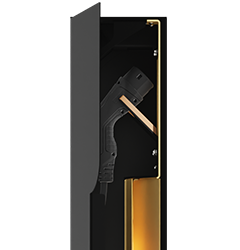
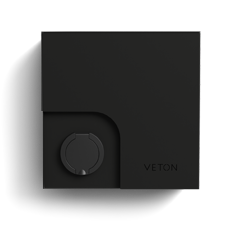
Yes. All Veton charging points are AC bidirectional ready. They include the hardware that ISO 15118-20 — the European standard for bidirectional Plug & Charge — requires of the charger side. When the legal framework lands and a software activation is released, an existing Veton installation can be enabled for bidirectional charging without changing the hardware.

In practice, however, bidirectional charging is not yet usable in most homes today, regardless of charger brand. The blocker is regulatory, not technical.

Why is bidirectional charging not usable yet?

For a vehicle to feed energy back into a building or grid, the combination of the specific car and the specific charger must currently be approved as a bidirectional system by the local grid operator (DSO). That approval has to be obtained separately in each EU country, with each country’s own rules and timelines. The result is that almost no real residential customer can actually run V2H or V2G in production today, except inside closed proof-of-concept pilots.

Europe is working on harmonised rules so that an approved car-and-charger combination is recognised across member states. The expectation is that a workable framework lands towards the end of 2026 or in 2027. Once that happens, the hardware that already sits in Veton chargers can be activated through a software update.

AC bidirectional vs DC bidirectional

There are two ways to do bidirectional charging, and they have very different implications for cost, complexity and how realistic each is for a normal residential project.

AC bidirectional

The car’s onboard charger is used in both directions: it converts AC from the grid to DC for the battery, and DC from the battery back to AC for the home or grid. The charger on the wall stays a relatively simple AC unit. The standard that governs this — including the digital handshake between car and charger, the metering, the authentication and the safety logic — is ISO 15118-20.

Europe is pushing AC bidirectional through the AFIR regulation (Alternative Fuels Infrastructure Regulation, EU 2023/1804). AFIR mandates ISO 15118 support on new public charging infrastructure from 2026 onwards, which sets the direction for the whole market. Veton already ships ISO 15118-20-ready hardware on every charger.

DC bidirectional

The conversion happens in the charger or in a separate inverter rather than in the car. That means the wall hardware needs a much larger and more expensive bidirectional power-electronics block, often shared with — or integrated into — the building’s solar inverter or home battery system.

Today, most working DC bidirectional pilots are closed proprietary stacks: a specific charger model, paired with a specific car model, paired with a specific energy-management platform from the same vendor. Mixing brands is rarely possible, and certification for a third-party vehicle is slow. For a premium home that wants the freedom to change car later, this is a significant constraint.

Which way is Europe heading?

Towards AC bidirectional. AFIR + ISO 15118-20 push the standardised, interoperable AC route, where any compliant car can use any compliant charger. DC bidirectional will keep its niche where high power and tight integration with a stationary battery or solar inverter make sense (e.g., commercial energy-storage installations), but as the residential default, AC bidirectional is the realistic future direction. Veton’s hardware decision is aligned with that direction.

What can I actually do today?

  • Specify a charger that is ready, so that no hardware needs replacing once the rules land. All Veton chargers are AC bidirectional ready and include the ISO 15118-20 hardware.
  • Plan the energy infrastructure assuming bidirectional will arrive: leave room in the component box, size the cable run for future use, and choose a car with a bidirectional-capable onboard charger.
  • Use the smart charging modes that work today — solar surplus, dynamic load balancing, dynamic tariff. Most of the value people expect from V2G can already be captured by smart unidirectional charging.

What about V2L?

V2L (vehicle-to-load) is a separate, much simpler feature where the car powers a small AC outlet directly — for tools, camping appliances, an emergency household circuit. It does not depend on the charger or on the grid operator. If a car supports V2L, the user can use it today through the car’s own socket. It does not require a bidirectional wallbox.

See also energy management & EMS integration, solar EV charging, local OCPP, EMS and cloud management and OCPP and charging platforms.